
Can tea tree oil help cold sores? Learn how its antiviral and anti-inflammatory properties may reduce pain, speed healing, and prevent infection.
What Is a Cold Sore and What Causes It?
A cold sore is a small, painful blister that appears around the lips or mouth, caused by the herpes simplex virus (HSV-1). These sores often start with a tingling or burning sensation before visible blisters form. Triggers like stress, sun exposure, or a weakened immune system can cause outbreaks.
Many people seek home remedies for cold sores, such as tea tree oil, to reduce symptoms and speed up healing. Understanding the virus helps in preventing future cold sore outbreaks.Understanding Tea Tree Oil and Its Properties
Understanding Tea Tree Oil and Its Properties
Tea tree oil is an essential oil extracted from the Melaleuca alternifolia plant, known for its powerful antiviral, antibacterial, and anti-inflammatory properties. These qualities make it a popular choice for treating skin issues, including cold sores.
The antiviral essential oils in tea tree oil may help fight the herpes simplex virus (HSV-1) that causes these blisters. When diluted properly, tea tree oil for cold sores can help reduce redness, inflammation, and discomfort while promoting faster healing and protection from infection.
What Research Says — Can Tea Tree Oil Help a Cold Sore?
| Category | Details | Tips for Use | Safety Notes |
|---|---|---|---|
| Scientific Evidence | Studies show tea tree oil has antiviral and anti-inflammatory properties against HSV-1, the virus causing cold sores. | Use only as a supportive remedy—not a standalone treatment. | Human clinical studies are limited, so results may vary. |
| How It Helps | May reduce viral activity, soothe irritation, and help dry out active sores. | Apply only during early stages (tingling, redness) for best effect. | Avoid use on broken skin or open wounds. |
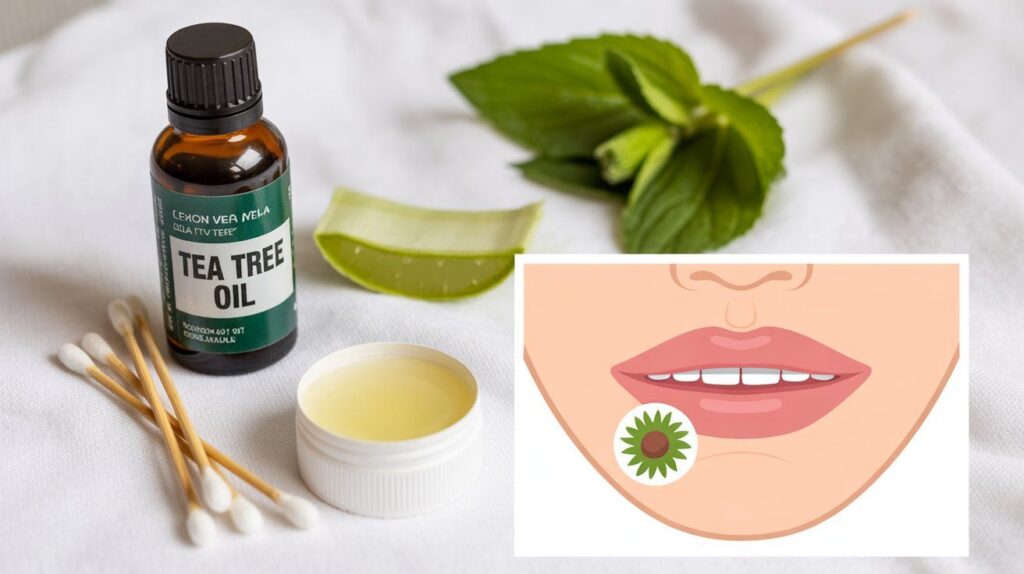
| Recommended Application | Topical use with proper dilution (1–2 drops in a carrier oil). | Use a cotton swab to avoid spreading the virus. Apply 1–2 times daily. | Stop if you experience burning, redness, or irritation. |
| Best Pairing Treatments | Works well alongside doctor-recommended cold sore treatments (acyclovir, docosanol, lysine). | Keep lips moisturized and avoid triggers like stress or sun exposure. | Do not rely on tea tree oil alone for severe or recurrent outbreaks. |
| When to Avoid | Sensitive skin, allergies to essential oils, or children under 12. | Patch-test first on inner arm. | Pregnant or nursing individuals should consult their doctor. |
| Expected Results | May shorten healing time and ease discomfort when used correctly. | Combine with proper hygiene and antiviral care. | Seek medical help if sores worsen or last more than 10–14 days. |
How to Safely Use Tea Tree Oil for a Cold Sore
When using tea tree oil for cold sores, always dilute it with a carrier oil like coconut or olive oil to avoid irritation. Apply the mixture gently to the affected area with a cotton swab two to three times daily. This helps dry out the cold sore, reduce swelling, and speed up healing.
Avoid using undiluted tea tree oil on lips or inside the mouth. Consistent, careful application can make this natural remedy an effective part of your cold sore treatment routine.
Other Effective Treatments and Natural Alternatives
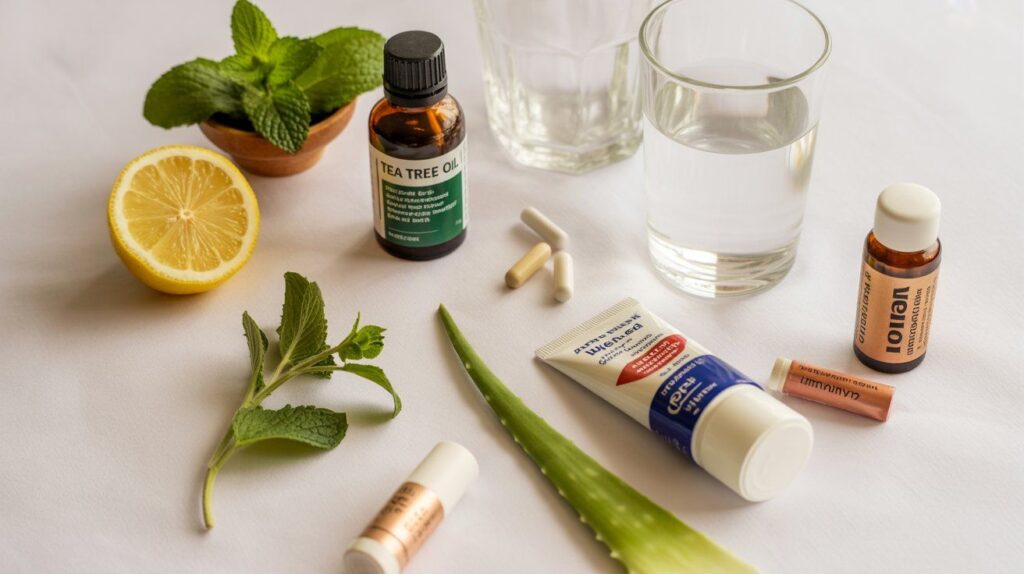
While tea tree oil can help soothe cold sores, it’s best used alongside proven antiviral treatments. Over-the-counter creams like acyclovir or docosanol can reduce healing time. Natural options such as lemon balm, peppermint oil, and aloe vera also show soothing effects.
These natural remedies for cold sores can ease discomfort and support healing. To prevent future outbreaks, maintain strong immunity, manage stress, and protect your lips from sun exposure with a cold sore prevention routine.
Conclusion
While tea tree oil shows promise in easing cold sore symptoms, it isn’t a complete cure. Thanks to its antiviral and anti-inflammatory properties, tea tree oil for cold sores can help dry out blisters, reduce redness, and support faster healing.
However, for recurring or severe cases, it’s best to combine it with professional cold sore treatments. Using natural remedies like tea tree oil safely and consistently may offer relief and help prevent future cold sore outbreaks effectively.
FAQs About Tea Tree Oil and Cold Sores
Q1: Can tea tree oil help a cold sore heal faster?
Yes, tea tree oil may help dry out cold sores and reduce inflammation due to its antiviral properties.
Q2: Is tea tree oil safe on lips?
Use only diluted tea tree oil to avoid irritation or burning.
Q3: Can tea tree oil prevent cold sore outbreaks?
While it can’t stop the herpes virus, regular use may reduce triggers and aid cold sore prevention naturally.

Jhanzaib Khan, with over 50 years of dedication to nature and tree conservation, is a leading authority in the world of trees and environmental care. From his early years exploring forests to guiding communities in sustainable tree planting, Jhanzaib has combined hands-on experience with a lifelong passion for the environment. He specializes in tree species identification, tree care, forest management, and environmental awareness. His insights have been featured in multiple nature blogs, workshops, and local conservation projects.