Discover which trees are poisonous to goats and how to protect your herd from harmful plants that can cause illness or death.
Toxic Tree Species – Trees Goats Should Never Eat
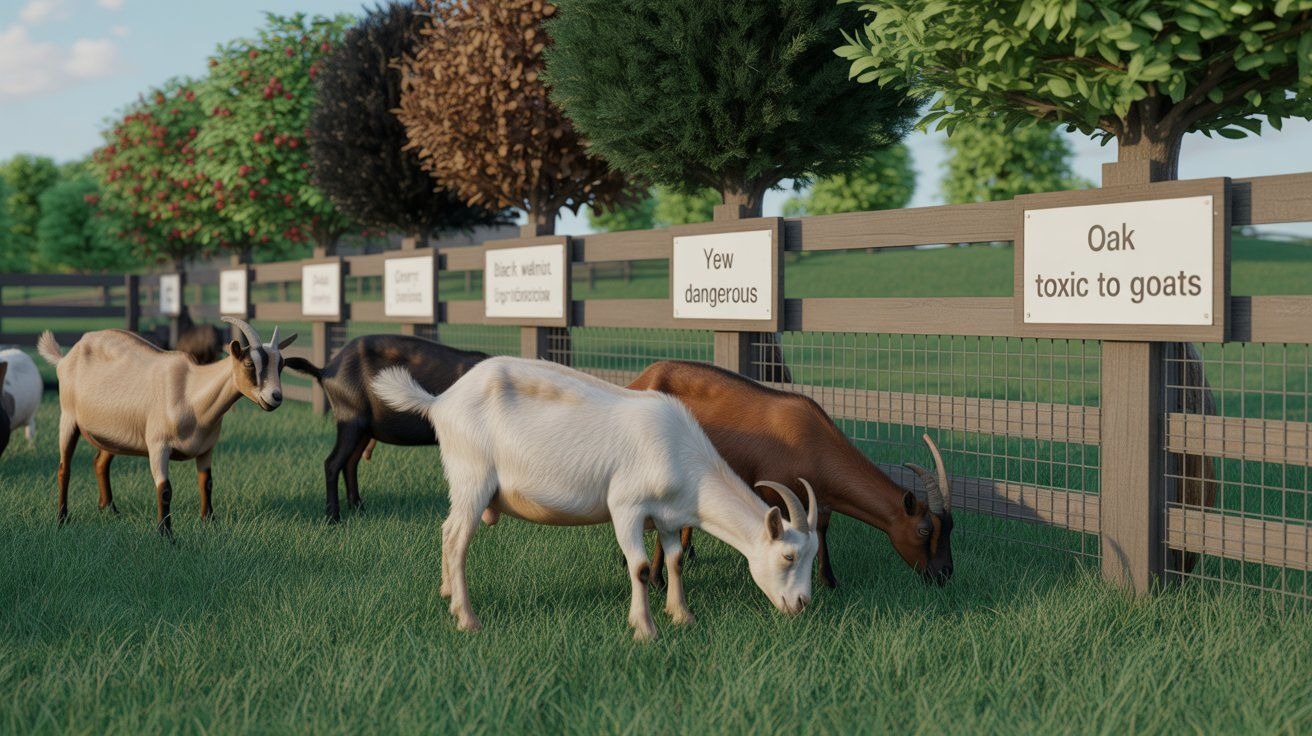
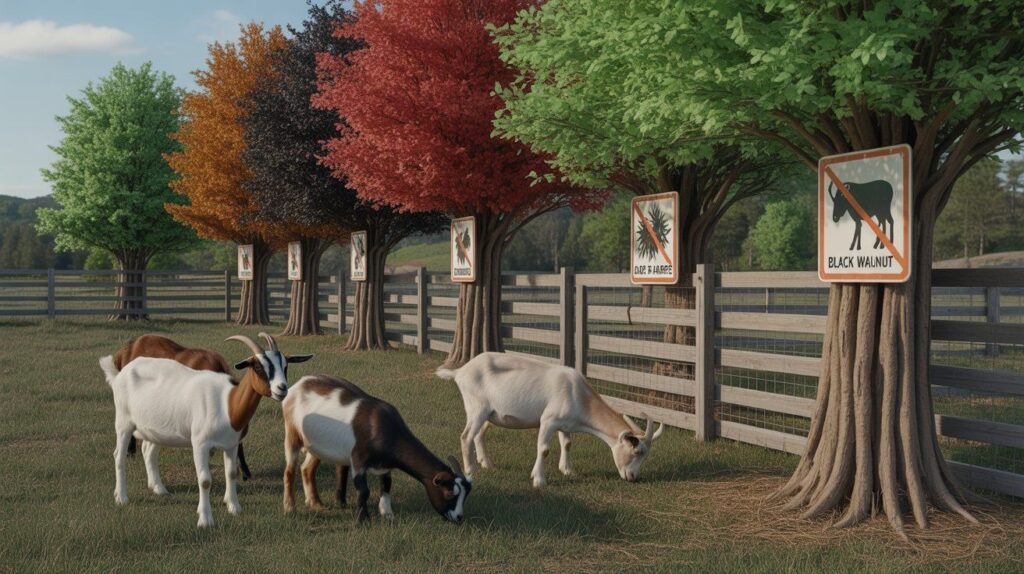
Some trees goats should never eat include yew, black cherry, oak, red maple, and black walnut. These trees contain harmful toxins like cyanide and tannins, which can cause poisoning, digestive distress, and even death in goats.
Yew is particularly dangerous—even a small amount can be fatal. Black cherry leaves release toxic cyanide when wilted, while oak leaves and acorns damage the liver.
Avoid letting goats browse these toxic trees, and remove fallen leaves or branches to prevent accidental ingestion.
Symptoms of Tree Poisoning in Goats
Recognizing tree poisoning in goats early can save lives. Common symptoms include lethargy, drooling, diarrhea, loss of appetite, and difficulty breathing. I
n severe cases, goats may show muscle tremors, colic, or sudden collapse. If your goat eats any toxic tree leaves or bark, contact a veterinarian immediately.
Quick treatment can prevent lasting damage to the liver or nervous system. Always monitor grazing areas closely and remove any dangerous trees to ensure your herd stays healthy and safe.
Safe Trees and Plants Goats Can Eat
| Tree Name 🌳 | Safety Level ✅ | Nutritional Benefits 🐐 | Special Notes 📝 |
|---|---|---|---|
| Willow Tree | ✅ Non-toxic | Rich in fiber, aids digestion | Excellent for natural enrichment and chewing activity |
| Mulberry Tree | ✅ Safe | Provides vitamins and minerals | Highly palatable — goats enjoy both leaves and branches |
| Poplar Tree | ✅ Safe | Contains trace minerals and tannins | Helps support gut health and immunity |
| Hackberry Tree | ✅ Non-toxic | Source of carbohydrates and roughage | Good supplemental browse in mixed pastures |
| Elm Tree | ✅ Safe | Adds fiber and essential nutrients | Grows quickly — great for sustainable goat browsing |
Preventing Tree Poisoning – Safety Tips for Goat Owners
Preventing tree poisoning in goats starts with proper management. Regularly inspect pastures and fencing areas for any toxic trees or fallen branches.
Goats are curious eaters and may nibble on harmful bark if food is scarce. Provide plenty of hay, safe browse, and clean water to reduce the urge to eat unknown plants.
Educate yourself on trees goats can’t eat and create a safe grazing environment. Taking these precautions protects your goats from poisoning and promotes long-term herd health and safety.
Expert Tips for Managing Goats Around Trees
Managing goats around trees requires vigilance and planning. Use fencing to restrict access to toxic trees like black walnut, red maple, or oak.
Rotate grazing areas to prevent over-browsing and exposure to dangerous plants. Always offer safe alternatives such as mulberry or elm branches for enrichment. Regularly check for fallen leaves or broken branches that could tempt curious goats.
By combining pasture management, proper feeding, and awareness of what trees goats can’t eat, you ensure both goat health and a thriving farm environment.
How to Identify Toxic Trees in Your Pasture
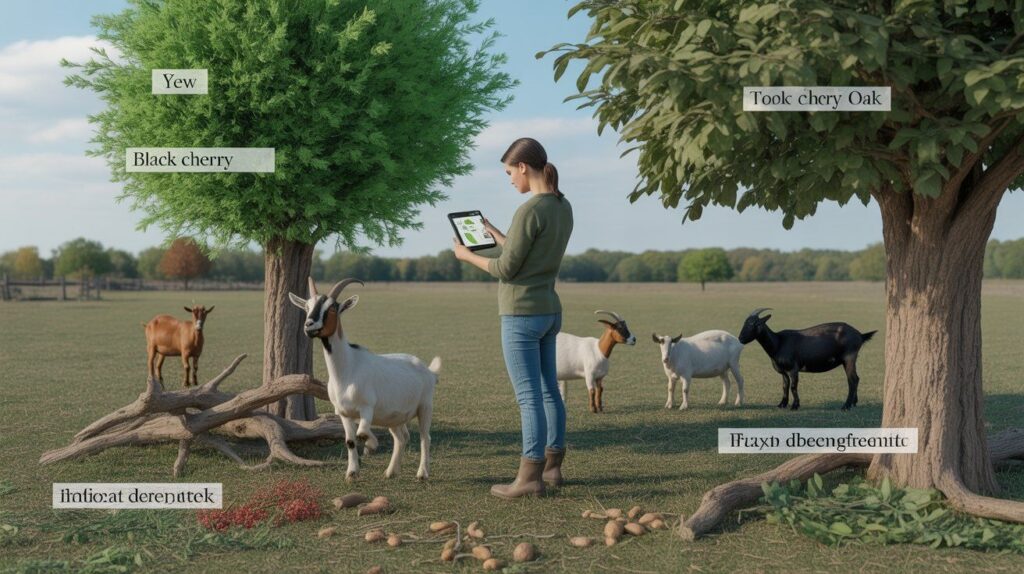
Identifying toxic trees in your pasture is essential for goat safety. Start by learning the appearance of harmful species like yew, black cherry, and oak. Look for distinct leaves, bark texture, and berries or acorns that signal toxicity.
Use plant identification apps or consult a local agricultural extension for guidance. Regular pasture inspections help detect new tree growth or fallen branches.
Knowing what trees goats can’t eat allows you to take quick action, protecting your herd from potential poisoning and maintaining a safe grazing area.
Conclusion – Keeping Your Goats Safe from Toxic Trees
Understanding what trees goats can’t eat is vital for every responsible goat owner. Trees like yew, oak, and black cherry may seem harmless but can cause severe poisoning or even death.
Always monitor your pastures, remove toxic species, and offer plenty of safe trees like willow and mulberry.
Providing a balanced diet and safe browsing options keeps your herd healthy, active, and productive. A little prevention and awareness go a long way in ensuring goat safety and long-term farm success.
FAQ: What Trees Are Toxic to Goats?
Q1: Which trees are poisonous to goats?
Yew, black cherry, oak, red maple, and black walnut are highly toxic.
Q2: What symptoms show tree poisoning?
Lethargy, drooling, diarrhea, loss of appetite, breathing issues, or tremors.
Q3: Are any trees safe for goats?
Yes—willow, mulberry, poplar, hackberry, and elm are safe and nutritious.
Q4: How can I prevent poisoning?
Inspect pastures, fence off toxic trees, and provide safe browse.
Q5: What should I do if my goat eats toxic leaves?
Call a veterinarian immediately for emergency treatment.

Jhanzaib Khan, with over 50 years of dedication to nature and tree conservation, is a leading authority in the world of trees and environmental care. From his early years exploring forests to guiding communities in sustainable tree planting, Jhanzaib has combined hands-on experience with a lifelong passion for the environment. He specializes in tree species identification, tree care, forest management, and environmental awareness. His insights have been featured in multiple nature blogs, workshops, and local conservation projects.