
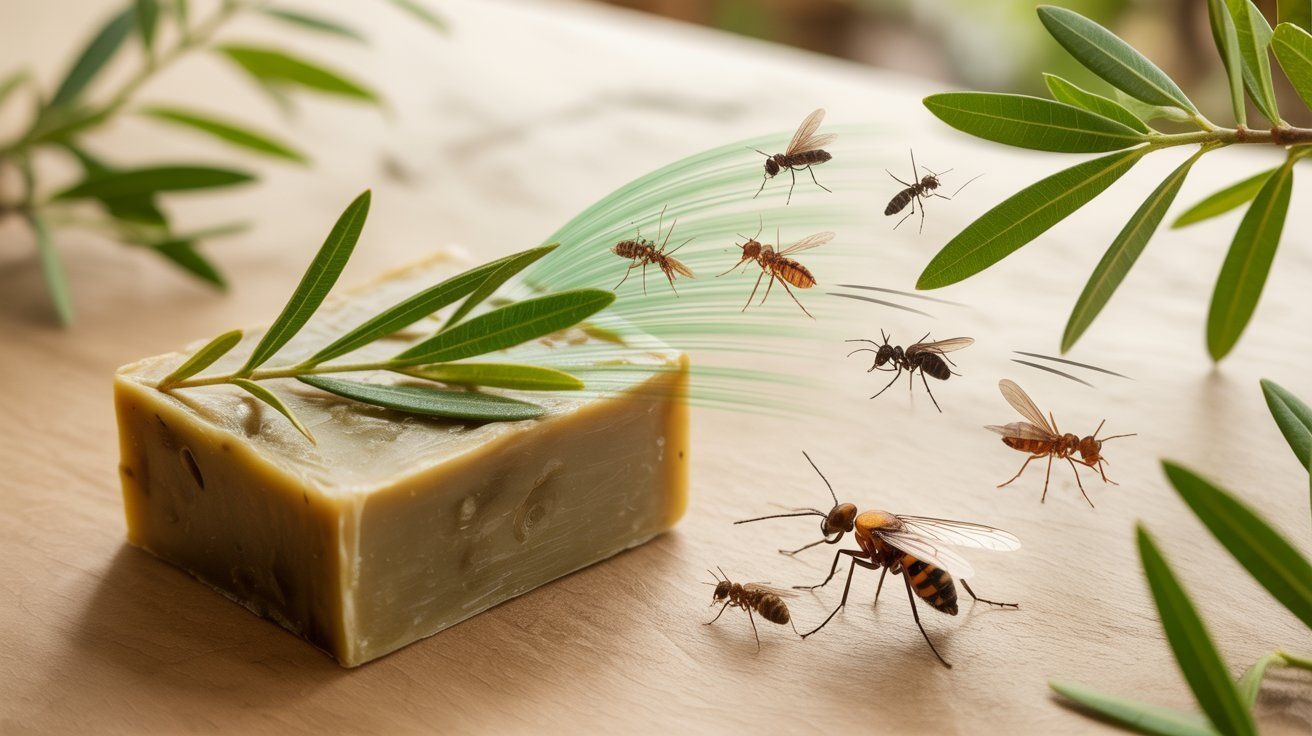
Can soap with tea tree oil repel bugs? Learn if this natural ingredient works as an insect deterrent and how to use it safely.
What is Tea Tree Oil & How It Works Against Insects
Tea tree oil, derived from the Melaleuca alternifolia plant in Australia, is a powerful natural extract known for its antiseptic and insect-repelling properties. It contains compounds like terpinene-4-ol and cineole, which disrupt insects’ senses and deter them from landing on the skin.
When used in a soap with tea tree oil, these elements can help repel bugs naturally. The strong, herbal aroma masks human scent, reducing attraction for mosquitoes, flies, and other biting insects.

Can Soap with Tea Tree Oil Actually Repel Bugs?
Many people wonder — can soap with tea tree oil repel bugs as effectively as traditional repellents? Research suggests that tea tree oil contains natural compounds that may deter mosquitoes, flies, and ticks.
However, when blended into soap, its concentration is often lower, so the protection may be short-lived. Still, washing with tea tree oil soap before going outdoors can create a light scent barrier that helps repel insects naturally, especially in mild bug-prone environments.
How to Use Tea Tree Oil Soap for Bug Protection
| Step / Tip | Action | Best Practice | Benefit / Result |
|---|---|---|---|
| Pre-Outdoor Wash 🧼 | Use soap with tea tree oil before going outside | Lather lightly, rinse, leave faint scent | Helps repel mosquitoes and other insects effectively |
| Daily Use on Trips 🚶♂️ | Wash once daily during hikes or camping | Maintain regular application | Ensures continued insect protection |
| Combine with Other Repellents 🌱 | Pair with citronella, neem, or natural oils | Layering increases coverage | Prolonged insect deterrence |
| Reapply as Needed 💦 | Refresh after sweating or swimming | Re-lather or lightly apply a few drops of tea tree oil | Maintains effectiveness in active outdoor conditions |
| General Safety ⚠️ | Test on skin first for sensitivity | Avoid eyes and broken skin | Prevents irritation while staying protected |
Pros & Cons of Using Tea Tree Oil Soap Versus Conventional Bug Repellents
Using soap with tea tree oil has clear advantages: it’s natural, gentle on the skin, and combines cleansing with insect deterrence. However, the main limitation is effectiveness — compared to chemical repellents, tea tree oil soap may provide shorter protection and requires frequent reapplication to repel bugs consistently.
For mild bug environments, it works well, but in high mosquito or tick areas, relying solely on tea tree oil soap may not suffice. Combining it with traditional repellents ensures better insect protection.
Common Myths & Misconceptions
A common question is whether soap with tea tree oil can provide all-day bug protection. The truth is, while it can help repel bugs, its effect is usually short-lived due to rinsing and evaporation. Another misconception is that all insects are deterred by tea tree oil soap — some species are less sensitive.
While it does reduce attraction for mosquitoes, flies, and ticks, relying solely on it in high-bug areas may not be sufficient. Proper use and realistic expectations are key.
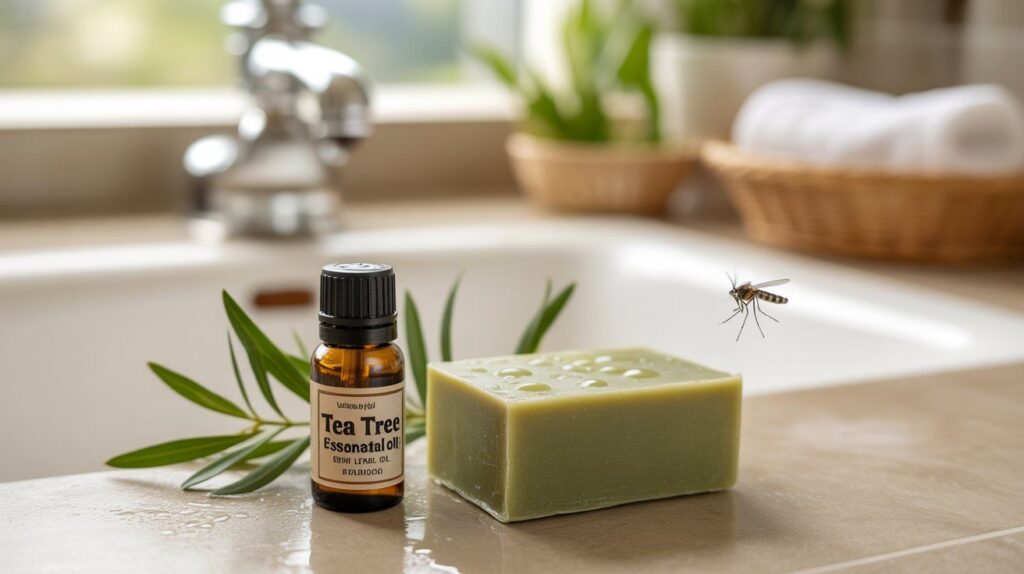
Frequently Asked Questions
Q1: Does soap with tea tree oil repel mosquitoes and ticks?
Yes, it can help repel bugs due to the natural compounds in tea tree oil, though protection is temporary.
Q2: How long does the effect last?
Because the soap is rinsed off, its insect-repellent effect usually lasts only minutes to an hour.
Q3: Can I replace chemical repellent?
No. Tea tree oil soap is best as a supplement, not a full substitute for stronger insect repellents in high-risk areas.

Jhanzaib Khan, with over 50 years of dedication to nature and tree conservation, is a leading authority in the world of trees and environmental care. From his early years exploring forests to guiding communities in sustainable tree planting, Jhanzaib has combined hands-on experience with a lifelong passion for the environment. He specializes in tree species identification, tree care, forest management, and environmental awareness. His insights have been featured in multiple nature blogs, workshops, and local conservation projects.