
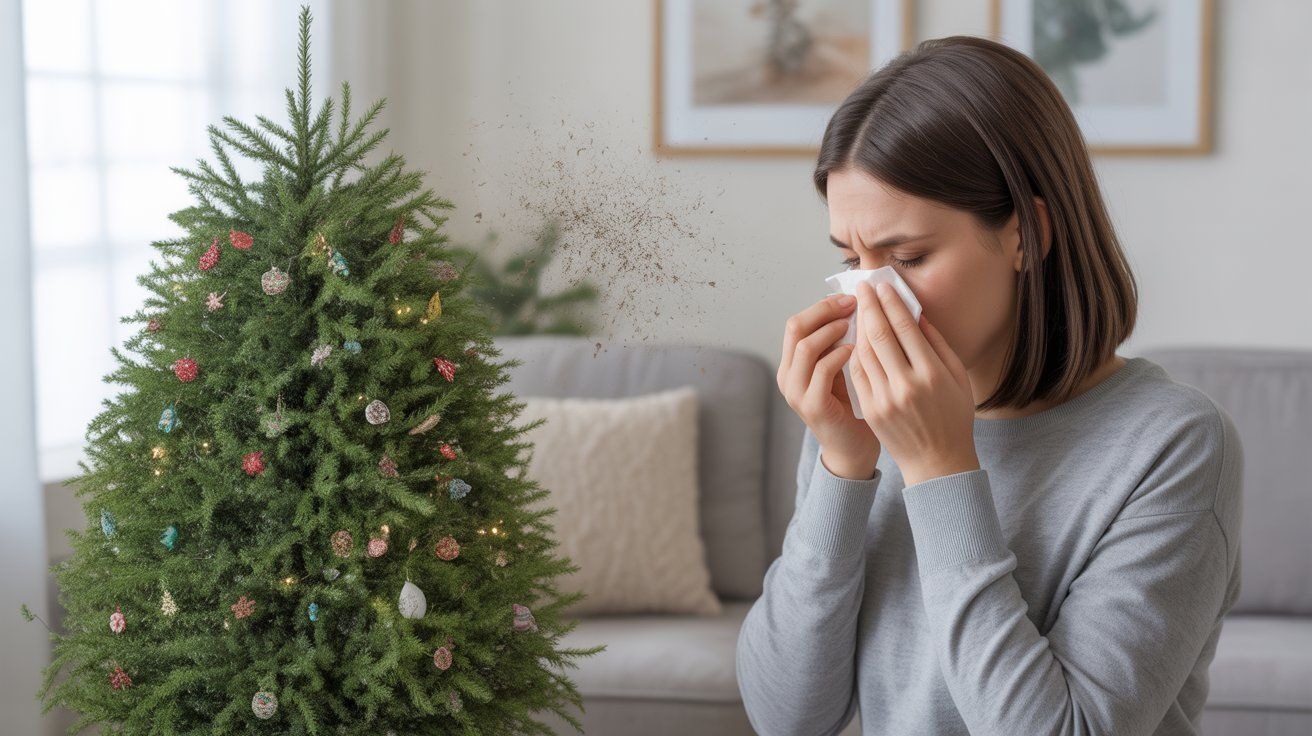
Can you be allergic to a Christmas tree? Learn about symptoms, causes, and tips to reduce allergic reactions from real Christmas trees.
Common Symptoms of Christmas Tree Allergies
If you’re asking, “can you be allergic to a Christmas tree,” it’s important to know the common symptoms. These can include sneezing, runny or stuffy nose, itchy or watery eyes, coughing, and skin rashes.
Children and adults with seasonal allergies may experience stronger reactions. Symptoms often appear soon after bringing a tree indoors and persist as long as exposure continues.
Recognizing these signs early helps you take steps to reduce allergens and stay comfortable throughout the festive season.

Causes of Christmas Tree Allergies
So, “can you be allergic to a Christmas tree”? Yes, and several factors contribute. Live trees can carry mold spores, pollen, and pine sap, all of which can trigger sneezing, itchy eyes, or skin irritation.
Artificial trees may accumulate dust and mold during storage, releasing allergens indoors. Understanding these triggers helps allergy-prone individuals take preventive steps.
Awareness of what causes Christmas tree allergies is essential for enjoying the holidays without sneezing, rashes, or respiratory discomfort.
Prevention and Management Tips
| Allergy Prevention Step | Action / Tip | Best Practice | Benefit / Result |
|---|---|---|---|
| Rinse Live Trees 💦 | Wash branches thoroughly before bringing indoors | Remove mold spores and pollen | Reduces exposure to allergens |
| Clean Artificial Trees 🧹 | Dust and wipe down before setup | Use a damp cloth or vacuum | Minimizes dust and mold accumulation |
| Limit Indoor Exposure ⏱️ | Keep tree indoors for no more than 2 weeks | Rotate or ventilate the room | Reduces prolonged allergen contact |
| Air Filtration 🌬️ | Use HEPA air purifiers in rooms with trees | Run during decoration and holiday period | Traps airborne allergens for cleaner air |
| Protective Measures 🧤💊 | Wear gloves while decorating; take antihistamines if needed | Follow label instructions for medications | Minimizes direct contact reactions and allergy symptoms |
When to Seek Medical Attention
Many ask, “can you be allergic to a Christmas tree?” While mild symptoms can be managed at home, seek medical attention if reactions worsen.
Signs include difficulty breathing, persistent wheezing, severe coughing, or widespread skin rashes. An allergist can perform allergy testing to identify triggers and recommend treatments.
Children and adults with asthma or other respiratory issues should be particularly cautious. Prompt professional care ensures safe management of Christmas tree allergies and prevents complications during the holiday season.

Conclusion
So, “can you be allergic to a Christmas tree”? Yes, but understanding the causes and symptoms helps manage reactions effectively.
By cleaning live or artificial trees, limiting indoor exposure, and using air purifiers, you can reduce contact with allergens like mold spores, pollen, and dust. Consulting an allergist for severe cases ensures proper care.
With these precautions, everyone can enjoy a festive, comfortable holiday season free from sneezing, itchy eyes, or skin irritation.
FAQ: Can You Be Allergic to a Christmas Tree?
Q1: What are common symptoms?
Sneezing, runny/stuffy nose, itchy or watery eyes, coughing, and skin rashes.
Q2: What triggers allergies?
Live trees carry mold, pollen, and sap; artificial trees may harbor dust and mold.
Q3: How can I prevent reactions?
Rinse live trees, clean artificial trees, limit indoor time, use HEPA purifiers, and wear gloves.
Q4: When to see a doctor?
Seek care for severe breathing issues, persistent wheezing, or widespread rashes.
Q5: Can children with asthma be affected?
Yes, they should take extra precautions during the holiday season.

Jhanzaib Khan, with over 50 years of dedication to nature and tree conservation, is a leading authority in the world of trees and environmental care. From his early years exploring forests to guiding communities in sustainable tree planting, Jhanzaib has combined hands-on experience with a lifelong passion for the environment. He specializes in tree species identification, tree care, forest management, and environmental awareness. His insights have been featured in multiple nature blogs, workshops, and local conservation projects.