Can you treat cold sores with tea tree oil? Find out how it fights infection, eases pain, and promotes faster recovery naturally.
What Is Tea Tree Oil?
Tea tree oil is a natural essential oil extracted from the leaves of the Melaleuca alternifolia tree. Known for its antiviral and antiseptic properties, it has been studied for its ability to combat the herpes simplex virus.
Many people ask, “can tea tree oil help a cold sore?” Evidence suggests that when applied topically, it may reduce inflammation, irritation, and support faster healing.
Diluting it with a carrier oil is essential to prevent skin irritation and maximize benefits.

Evidence: Can Tea Tree Oil Help a Cold Sore?
Many people wonder, “can tea tree oil help a cold sore?” While clinical studies are limited, research suggests that tea tree oil possesses antiviral properties that may help reduce or inhibit HSV-1 activity..
Laboratory studies suggest it can reduce virus replication and calm inflammation around cold sores. Topical application may provide relief from pain and irritation, but results vary.
More research is needed to confirm consistent effectiveness. Still, it remains a popular natural cold sore remedy.
How to Use Tea Tree Oil for Cold Sores Safely
| Step 🩺 | What to Do 💧 | Why It Matters 🌼 | Pro Tip 💡 |
|---|---|---|---|
| 🧴 Dilute Properly | Mix 1 drop of tea tree oil with 1 teaspoon of coconut or olive oil | Prevents skin irritation and dryness | Avoid applying undiluted oil directly on lips |
| 🧫 Do a Patch Test | Test on a small area 24 hours before use | Checks for allergic reactions | Stop use if redness or itching occurs |
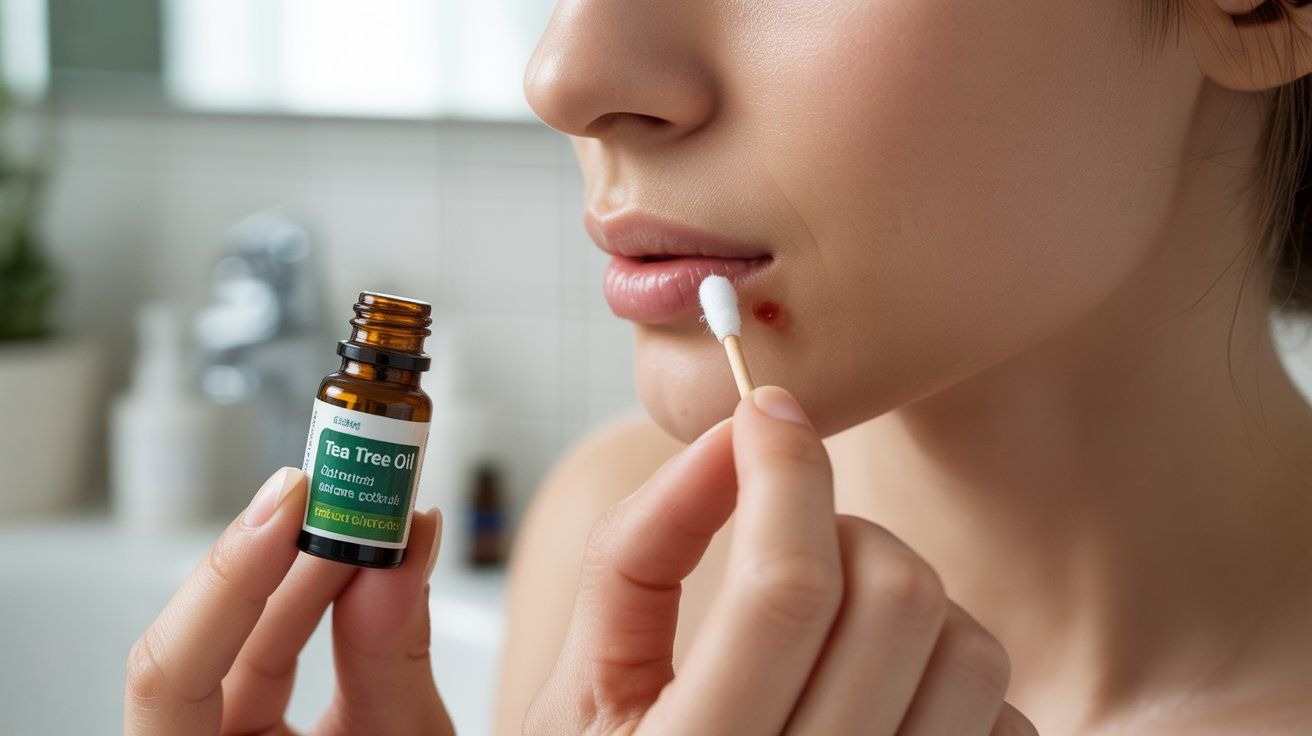
| 💋 Apply Gently | Use a clean cotton swab 1–2 times daily on the sore | Reduces inflammation and speeds healing | Wash hands before and after application |
| 🚫 Avoid Overuse | Limit to small, affected areas only | Prevents sensitivity or skin damage | Don’t use on broken skin or open wounds |
| 👶 Use with Caution | Not recommended for children under 12 | Kids’ skin is more sensitive | Ask a doctor before use on young users |
Risks and Side Effects
While many ask, “can tea tree oil help a cold sore?” it’s important to know the risks. Tea tree oil can cause skin irritation or allergic reactions, especially if applied undiluted.
It is toxic if ingested, so keep it away from children and pets. Those with sensitive skin should perform a patch test before use.
Although it may provide relief, tea tree oil should not replace conventional antiviral treatments without consulting a healthcare professional.
Alternative and Complementary Treatments
For those considering options beyond tea tree oil, you might ask, “can tea tree oil help a cold sore better than other remedies?” Natural alternatives like lemon balm, aloe vera, and peppermint oil have shown potential to reduce symptoms and support healing.
Over-the-counter antiviral creams like docosanol (Abreva) can shorten healing time, while supplements such as lysine and zinc may help prevent future outbreaks.
Combining these treatments with tea tree oil can provide a holistic approach to cold sore care.

Conclusion: Can Tea Tree Oil Help a Cold Sore?
So, can tea tree oil help a cold sore? Evidence suggests it may provide mild relief by reducing inflammation, irritation, and supporting the healing process.
While it can be a helpful natural cold sore remedy, it should always be used with proper dilution and caution. Tea tree oil is not a replacement for conventional antiviral treatments.
For best results, combine it with safe topical applications, immune support, and professional guidance.
FAQ: Can Tea Tree Oil Help Cold Sores?
Q1: Does tea tree oil work on cold sores?
Yes, it has antiviral and anti-inflammatory properties that may reduce pain and support healing.
Q2: How should it be applied?
Dilute with a carrier oil and apply with a cotton swab once or twice daily.
Q3: Is it safe for everyone?
Patch test first; avoid undiluted application and keep away from children and pets.
Q4: Can it replace antiviral creams?
No, it complements but does not replace conventional treatments.
Q5: Are there other remedies?
Lemon balm, aloe vera, peppermint oil, and lysine supplements may also help.

Jhanzaib Khan, with over 50 years of dedication to nature and tree conservation, is a leading authority in the world of trees and environmental care. From his early years exploring forests to guiding communities in sustainable tree planting, Jhanzaib has combined hands-on experience with a lifelong passion for the environment. He specializes in tree species identification, tree care, forest management, and environmental awareness. His insights have been featured in multiple nature blogs, workshops, and local conservation projects.